
Quiet Fire, Sacred Power
On the false divide between the contemplative and the charismatic

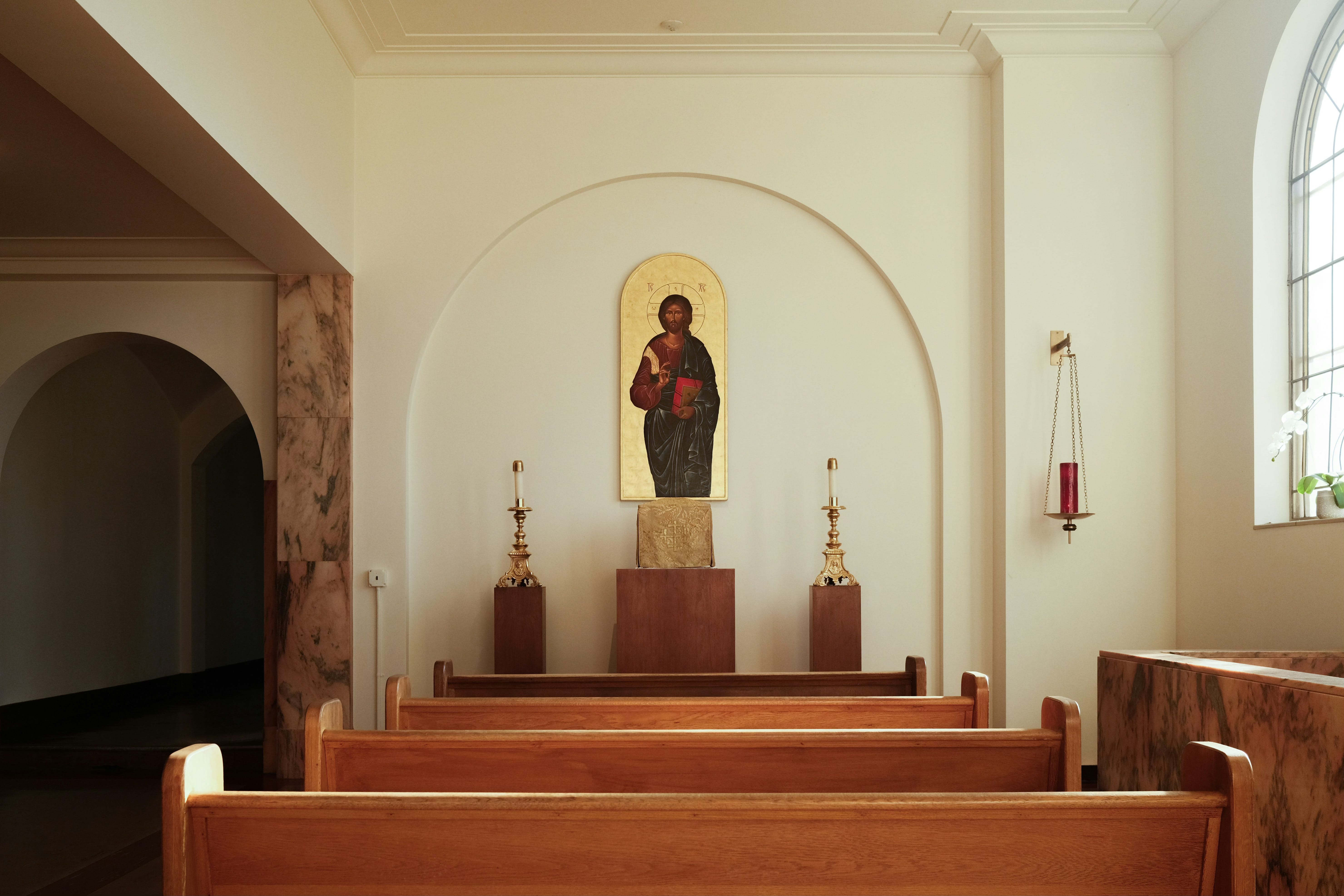
The Flame of Love,
full of divine affection,
is the Giver who
overwhelms us, and,
through us, overcomes
the world.
Jesus made the gospel about love. Love for God, love for neighbour. A love that, one of the first apostles would proclaim, is so magnitudinal that it’s incomprehensible without divine revelation1. A revelation that helps us to know it, and experience it, far beyond rationality and imagination.
This love is Trinitarian. Perfect harmony. Total interpersonal engulfment without any insecurity in eternal unceasing bliss.
What makes Christianity so magnificent, is that this self-giving and self-offering love isn’t only part of the power at its heart, but it is the very power at its heart. Love is the power of God and the name of that love is Jesus Christ. The Beauty upon which we’re called to gaze unceasingly as our very means of sustenance and life2.
Beholding prayer is the act of gazing upon that love, the Christ, from the depths of ourselves in total naked self-abandonment. Why? Because that’s how God loved us first. Naked on the cross, baring all, risking all, for you and I. Through Jesus God has made himself and his longing love for us completely and totally available in the hope that we would return the favour with our very souls.
Paul calls this contemplating the Lord’s glory3 with unveiled faces. A process in which we are actually transformed more and more into him. In this prayer we gaze upon Christ’s love displayed in his incarnation, death and resurrection, and ascension. By gazing upon all this we both die and come back to life. Both dwell on earth and abide in heaven. Prayer is the invitation to transcend all that we know and participate in Christ’s powerful love, making all things new. It establishes Christ within us and we become a new dwelling for the kingdom of heaven to advance.
All that is to say that beholding prayer is as much a power-event as anything else because there is no distinction between power and love in the Trinity. To dwell in God’s love is to dwell in his power. This power that death cannot overcome, nor demon or principality separate us from4. God’s love is so profound and eternal it is itself the purest form of power in the cosmos.
This means that there is no distinction between beholding prayer or the traditions of the church that are more focused on demonstrations of power through the Holy Spirit. A distinction often languaged as a dichotomy between the contemplative and the charismatic. The contemplative, because of their desire to have all of the Trinity in a flaming, self-abandoned communion of love in the home of the soul, actually abide in the purest pursuit of power. Because it requires Loves power to draw it into Himself. But in this relationship of longing it doesn’t seek that power as an end in and of itself, but as the means to a deeper self-giving to the Beautiful One.
Even more, the contemplative who truly seeks the face of Christ and to dwell in the power of his love, must inevitably long for the gifts offered through the Holy Spirit. Why? Because these gifts are given with the promise that they help us to love5. Prophecy, healing, miracles, tongues, discernment of spirits and the rest are not rewards for righteous behaviour, they’re tools given to longing souls to share God’s love with the church and in doing so have a deeper experience of God’s love within themselves.
By receiving and participating in the gifts of the Spirit the contemplative drinks the love of God flowing through them, getting another taste of the Trinity they ache to be consumed by. The gift matters far less to them than the opportunity it gives them to serve someone else. The happy side effect is that the giver is filled as they serve. This is the way of God, “it is better to give than to receive”.6
Because of all this there is no gap between the “charismatic” and the “contemplative”, there is only love expressed in power through the one who desires to gaze upon the beauty of God. One can’t gaze upon God without aching to turn to the other because that’s who God is. Not static, but a triune community of perfect self-giving love. Not only that, God showed us through Christ that this love is perfectly missional, always reaching out to others. Therefore it is impossible to truly gaze upon God without seeing others through him and becoming missional ourselves, longing to meet them in the same divine way as Christ does us.
In this way, contemplation is inherently prophetic.
Anyone who claims to gaze upon God, but doesn’t long for this missional and Spirit-expressive power to be made known through their life hasn’t yet truly seen him. Because the God we meet in prayer can be absolutely no less than Christ who gave his whole life to reach out to others and who gave the Holy Spirit to the church to become his love-expressive power in the world.
By that truth we can even say that if a contemplative isn’t receiving spiritual gifts and sharing them with their world in an active way they are young in their journey and need a deeper revelation of the reality of the love they seek. What those gifts are is up to Christ, though we’re encouraged to seek prophecy as the chief love-gift. But that we’re to receive is a non-negotiable. Contemplation has to overflow toward its neighbour and the contemplative understands more than most that if it’s not divine it will have no power to heal.
If there was any significant distinction between the cultures of the contemplative and the charismatic it would be this. We live in a century with an emerging neo-contemplative movement that offers a reactionary spirituality to people escaping the abuses of other traditions - a home seemingly unanchored from its historical forebears. One that is all poetry and long walks, that is practice-based and not Christ-affective, and that yields an unbalanced focus on the mysterious, universal Word over the face of Christ incarnate.
I actually understand the desire for something other than the places we’ve experienced fundamentalism, abuse and politicisation and have genuine sympathy for it. But I’ve seen this neo-contemplative movement capture some hearts and minds in a waiting place between there and real satisfaction in Christ. It’s become something of a waiting room between the kingdom and the backdoor. Somehow, in reading the mystical writings and discovering the possible depths of contemplative prayer, the tradition becomes more of a psychological comfort than a tangible, experiential relationship with Christ through the Spirit.
The danger is that some people in this space love contemplative practice more than Christ and the bitterness and unhealed anger they carry keeps them from the very contemplation they seek. All the liturgy in the world can’t heal a misjudged agenda. Whether it’s someone seeking the right ‘model’ amidst their deconstruction or a pastor looking for better tools to disciple their congregations, contemplation becomes another tool, another step, in the never ending journey towards some utopia where we get to avoid facing ourselves, and Christ, in genuine, soul-baring prayer.
I’m not trying to judge anyone personally, just to point out that the contemplative tradition is about the souls burning desire for Christ, the whole Christ not just some universal principle or emanation, and that the tradition of neo-contemplation can become just as much a trap for them as any they’re seeking refuge from.
It’s totally possible to be in a room of ‘professional’ contemplatives who talk more about silence, rumi, spiritual practices, social justice or unbounded mystery than their love of Christ in prayer. It’s contemplativism without the mysticism of love. God forgive me where I’ve done the same!
On the other hand are the charismatics who, having received the gifts as a force for love often come to prefer them to Christ himself. These charismatics love the mission of God and talk endlessly of God’s presence but have very little rest in it. Their focus on God being in heaven and needing to act upon us and the world often comes at the cost of God within us already acting in eternal love upon the soul. This God-distance gives rise to fundamentalism and a rigid black-and-whiteness where truth remains unaffected by the softness and gentleness of love - a gentleness that can only rise from experiencing God's mercy in our ugliness on a daily basis. Because they are loud, the work of the Spirit is assumed to be loud too, forceful, and almost always in a room, a cloud or a meeting rather than dwelling in the home of the soul.
The end result is a powerful but insecure community who never feel enough inside. The gifts become the sign of God, and the gifts are never enough. Love is not held as ultimate power so much as the gifted person is.
Both of these examples aren’t a description of all present contemplatives or charismatics by any stretch of the imagination. I’m only trying to speak to the caricatures that keep us mentally bound. Though they are, sadly, a reality for so many people.
The contemplative vision is of a people who, in quiet fire, burn with longing to be made one with Him who made them for Himself. That in that deep burning they catch a vision of his self-offering heart and, realising that even their own love springs from God’s, earnestly and with all of themselves pray for the divine power to love their neighbour divinely. Not only with gifts, but in the miracle of true meekness, unity, humility and patience. It’s a vision of a church filled with wisdom and revelation, the kind that can come only from direct face to face contact. It’s for prophecy, healing, deliverance, miracles and for the power to turn distracted hearts and minds toward the beauty of Christ who is all and through all and who holds all things together.
There is no dichotomy between the two worlds we often describe as ‘charismatic’ and ‘contemplative’. At least not if we place the theology, teaching and demands of the New Testament upon them both. There is only the deep longing for Christ, and the life that springs out of each of us as we seek Him.
Holy Spirit, unchain us from
our stereotypes and assumptions,
and liberate us in the power of your love,
that we may truly behold and enjoy
your beauty, forever.
Amen.
“I pray that out of his glorious richeshe may strengthen you with power through his Spirit in your inner being, so that Christ may dwell in your hearts through faith. And I pray that you, being rootedand established in love, may have power, together with all the Lord’s holy people, to grasp how wide and long and high and deep is the love of Christ, and to know this love that surpasses knowledge—that you may be filled to the measure of all the fullness of God”. - Ephesians 3:16-19
“And we all, who with unveiled faces contemplate the Lord’s glory, are being transformed into his image with ever-increasing glory, which comes from the Lord, who is the Spirit.” - 2 Corinthians 3:18,
“Dear friends, now we are children of God, and what we will be has not yet been made known. But we know that when Christ appears,[a] we shall be like him, for we shall see him as he is.” - 1 John 3:2
“Behold, the Lamb of God, who takes away the sin of the world!” - John 1:29
2 Corinthians 3:18
Romans 8:38-39
“Follow the way of love and eagerly desire gifts of the Spirit, especially prophecy.” - 1 Corinthians 14:1
“Now to each one the manifestation of the Spirit is given for the common good.” 1 Corinthians 12:7
Acts 20:35
I appreciate your approach to the contemplative tradition and the charismatic desires. Like you, I prayer the stereotypes will be destroyed and all that's left is the fire of the love of and for Jesus!
Some important lines (among many!): "Not static, but a triune community of perfect self-giving love." And the dangers of a "contemplativism" that is "all poetry and long walks, that is practice-based and not Christ-affective, and that yields an unbalance focus on the mysterious, universal word over the face of Christ incarnate."